State of Survival: Zombie War
- 4.3
- Rating
- 50.00M
- Installs
- Free
- Price
 Analysis by App-foxy
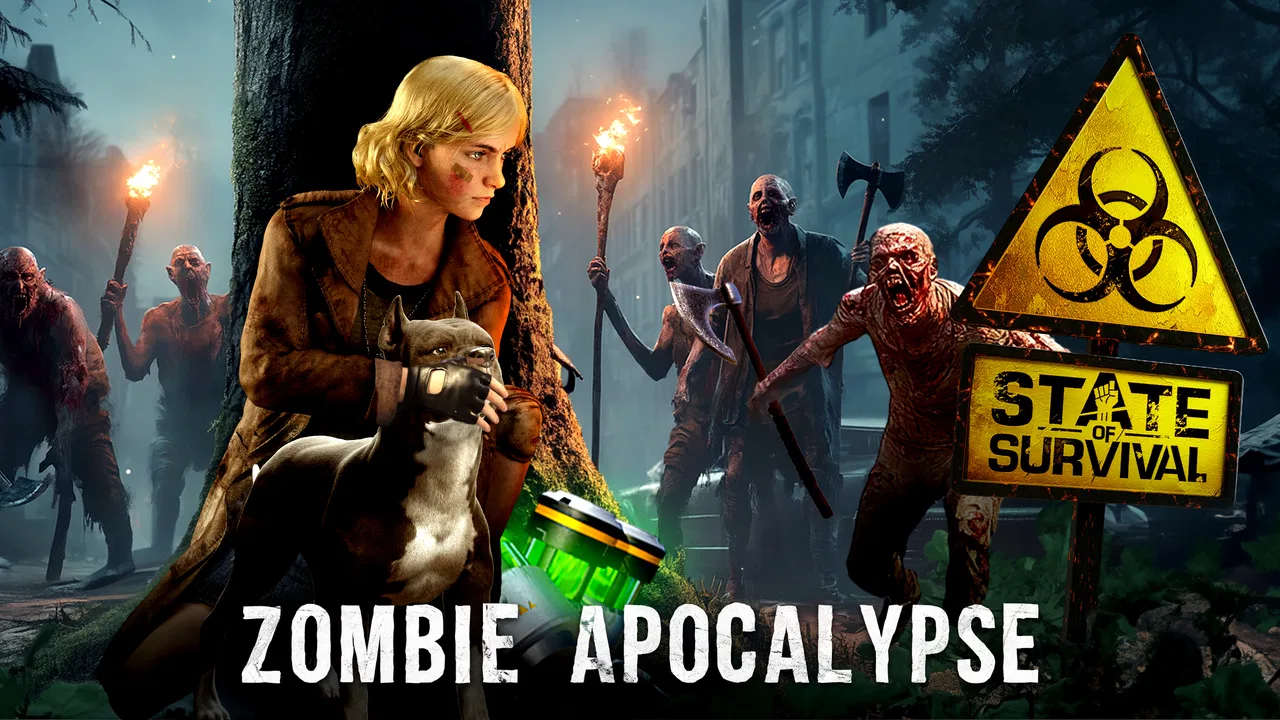
I spent time with State of Survival: Zombie War as a mobile strategy game built around surviving a ruined world, developing a settlement, and making choices that matter beyond a single battle. It is free to start, aimed at Teen players, and made by FunPlus International AG. What stood out to me first was that it is not simply a quick zombie shooter: its rhythm comes from planning, waiting, improving, and deciding where limited attention is most valuable.
The game has clearly found a large audience, with a 4.3 average from around 2.3 million ratings and more than 50 million installs. Those figures do not automatically make it right for everyone, but they do tell me that this is an established mobile strategy experience rather than a short-lived experiment. I approached it as someone deciding whether to keep it installed, not merely as someone checking the opening tutorial.
How the game feels during ordinary play
The early experience is designed to keep you moving. Missions, settlement tasks, character development, and battles give you several reasons to return to the same screen. In my experience, the perceived speed depends less on reflexes than on how well I organize the next few actions. When I had a clear goal, such as improving a building or preparing for a fight, the game felt active even while some progress was unfolding in the background.
You May Also Like

 Pandora - Music & Podcasts
Pandora’s Music Is Easy to Start, but Harder to Recover
Pandora’s strength is its low-effort path from a seed to a station. Its weak spot is how much confidence it asks you to place in connection, setup, and quiet recovery.

 8 Ball Pool
 Is Built on Rivalries, Rematches, and Routine
A close look at the rivalries, rematches, shared routines, and unanswered safety questions that turn a quick pool match into a persistent mobile community.

 Samsung Music
’s Quiet Strength Is Playing What You Already Own
Its reach comes less from spectacle than from dependable access to a personal library. That simplicity is both the app’s strongest retention engine and its ceiling.

 AccuWeather: Weather Radar
AccuWeather Review: A Quick, Clear Forecast for Everyday Decisions
For everyday plans, the best forecast is the one you can understand quickly. AccuWeather makes rain timing, radar, and local conditions easy to act on, with a few trade-offs.

 Hill Climb Racing
Why Hill Climb Racing Still Turns Crashes Into One More Run
A tiny car, a bumpy hill and one more upgrade: Hill Climb Racing keeps resurfacing because its simple chaos makes every near-miss feel personal.

 AliExpress - Shopping App
AliExpress Makes Global Shopping Feel Personal, but Shoppers Bear the Risk
AliExpress turns a global marketplace into a pocket-sized discovery engine. Its reach is useful, its shopping loop compelling, and its trade-offs easy to miss.
More From Our News Desk
View All News


That distinction is important. This is not the best choice if you want every minute to be filled with direct control. Much of the satisfaction comes from setting priorities and checking the results later. A player who enjoys real-time action may find the pauses slow, while someone who likes city-building and long-term planning may appreciate the calmer pace between conflicts.
The interface gives you plenty to inspect, and that can make the first sessions feel busier than expected. I found it useful to resist tapping every available prompt immediately. Instead, I chose one short-term objective and treated the other notifications as reminders for later. That simple habit made the game feel less scattered and helped me understand which decisions actually affected my progress.
Where the pace becomes demanding
State of Survival becomes more involving when several parts of the settlement need attention at once. A routine session can turn into a sequence of choices: whether to spend resources on development, strengthen a character, advance a mission, or save materials for a more important requirement. The game rewards regular checking, but it can also make casual play feel like a list of unfinished chores.
One useful approach is to group actions by purpose. I prefer to begin by checking the next meaningful upgrade, then review missions that support it, and only afterward spend time on optional activities. This prevents small rewards from dictating my entire session. It also makes the game feel faster because every tap contributes to a plan instead of sending me between unrelated menus.
Heavy-use moments arrive when the game presents several objectives together or when I try to advance multiple parts of the settlement in one sitting. That is when the amount of information matters more than the visual action. I had to pay attention to requirements, timing, and available resources rather than simply choosing the most obvious button. The depth is welcome, but the learning curve is not as gentle as the zombie theme might suggest.
What happens when you play in short sessions
A realistic everyday use case is a player checking the game during a commute, a lunch break, or a few quiet minutes in the evening. In that situation, it works best when I decide in advance what I want to accomplish. I might start one improvement, collect what is ready, complete a nearby objective, and leave. That creates a satisfying loop without demanding a long uninterrupted session.
Short sessions are less comfortable when I try to understand a new system at the same time. The game contains enough connected decisions that stopping halfway through a plan can make the next visit feel like a restart. For that reason, I would not recommend opening it when you only want a completely effortless distraction. A simpler arcade game is a better fit for that mood.
There is also a trade-off between convenience and attention. Returning regularly can help maintain momentum, but the game may encourage you to think about the next task even after you close it. I enjoyed that sense of continuity in moderation. If you prefer games that stay entirely inside one focused session, the ongoing settlement-management structure may feel demanding.
Reliability and the experience of returning
My overall impression is that the game is built for repeated visits rather than one long campaign completed in a weekend. That design makes recovery from an interrupted session fairly straightforward when I remember my last objective. I can reopen the game, review what changed, and continue with the next decision. The recovery is less comfortable when I leave several unrelated tasks active in my mind.
For dependable progress, I recommend ending each session with a clear note to yourself: what you are improving, what resource you are saving, and what you want to check next. This is a small practice, but it matters in a strategy game with several overlapping systems. It reduces the chance of wasting a visit on random upgrades and makes the return experience feel more controlled.
The game’s long-term structure also means that reliability is not only about whether an app opens. It is about whether progress remains understandable after time away. I found that the main challenge was remembering the logic of my plan, not learning the basic controls again. Players who enjoy maintaining a developing base will likely see this as continuity; players who dislike persistent management may see it as pressure.
Device expectations and resource awareness
The listed minimum operating-system requirement is Android 7.0, which makes the game accessible to a broad range of Android devices on paper. That should not be confused with a promise that every older phone will feel equally comfortable. A strategy game with settlements, characters, menus, and repeated visual activity can place more demand on a device than a very simple puzzle game, especially during longer sessions.
I would approach installation with realistic expectations if your phone has limited storage, older hardware, or little free memory. Keep other demanding apps closed before a long session, avoid judging performance during the first few moments after launching, and leave room for the game to operate comfortably. These are sensible precautions rather than guarantees, but they can reduce unnecessary friction on modest devices.
Battery awareness matters as well. I would not choose this as a game to leave open for hours while the phone is already warm or low on charge. The better pattern is to make decisions, start the next useful action, and close the game when the session has reached a natural stopping point. That approach suits the game’s strategy rhythm and is kinder to a device than constant checking.
Players on newer phones may still prefer to manage expectations around visual quality and multitasking. The important question is not whether the game looks busy, but whether your device remains comfortable while you move through its different screens. If switching between the game and other apps is a priority, a lighter strategy title may feel more convenient.
Free entry, spending pressure, and planning
The game is free to download and play, but it includes in-app purchases ranging from $0.49 to $199.99 per item. That range is significant because it changes how I evaluate the experience: the real test is whether I can enjoy planning without treating payment as the default solution to every delay.
I recommend deciding on a personal spending limit before getting deeply involved. The game’s structure makes it easy to see an immediate benefit from accelerating progress, but an immediate benefit is not always a good long-term decision. Saving resources, choosing upgrades carefully, and accepting a slower pace can preserve the strategic part of the experience.
This is one of the clearest situations where the game may not be right for someone. If you know that timers, competitive pressure, or visible shortcuts will make you spend impulsively, a premium strategy game with a single upfront price may be healthier. State of Survival is more suitable for players who can treat purchases as optional and remain comfortable progressing at their own pace.
Who will enjoy the strategy most
I would recommend it to players who like combining settlement development with survival themes, especially those who enjoy returning to a growing world over many sessions. It suits people who want more structure than a basic match-three game but less constant manual action than a traditional console strategy title. The zombie setting gives the decisions an accessible context, while the ongoing management supplies the depth.
I would be more cautious about recommending it to someone who wants a fully offline experience, a short story with a fixed ending, or a game that can be understood in a single sitting. It is also not ideal for players who dislike notifications, resource planning, or the possibility of spending money to speed up progress. The free price removes the barrier to trying it, but it does not remove those design choices.
Compared with a conventional turn-based strategy game, this one feels more persistent and appointment-based. Compared with a simple zombie action game, it asks for more patience and broader planning. That middle ground is its main identity. You are not only surviving the next encounter; you are shaping the conditions that make future encounters manageable.
Practical habits that improve the experience
My first practical tip is to avoid upgrading whatever happens to be available. I get more value by deciding which improvement supports my current objective and postponing attractive but unnecessary options. This keeps resources from becoming scattered and makes later requirements easier to interpret.
My second tip is to use short sessions deliberately rather than apologizing for them. The game’s ongoing structure makes a ten-minute visit useful when it has a purpose. Collect, review, choose the next action, and leave. That is often more satisfying than opening the game repeatedly without knowing what I want to accomplish.
A third insight is that recovery improves when I finish with a simple plan. Before closing, I identify the next upgrade, the resource I should protect, and the mission I want to revisit. This turns the next launch into a continuation instead of another tour through every menu.
Finally, I would separate progress goals from spending decisions. If an improvement feels slow, I first ask whether it is genuinely necessary now or merely visible. That pause protects the strategic element and helps keep the free-to-play structure from controlling my priorities.
My performance verdict
State of Survival: Zombie War is a substantial mobile strategy game with a clear focus on persistent progress, settlement decisions, and survival-themed management. Its perceived speed is strongest when I approach it with a plan, while its heaviest moments come from handling several objectives and resources at once. The experience is more about thoughtful continuity than quick reactions.
The Android 7.0 minimum makes the entry point broad, but device age, available resources, and session length will still shape comfort. I would keep expectations moderate on older hardware and avoid long, uninterrupted play if heat or battery life is a concern. The game’s free access makes trying it easy, while the wide purchase range means disciplined spending is important.
After playing it as an everyday mobile strategy option, I see its greatest strength in the way small decisions build into a larger survival routine. Its main weakness is the same structure: progress can feel busy, slow, or financially tempting when I want a quick, uncomplicated game. Choose it if you enjoy planning your next move and returning to a developing settlement; skip it if you want instant action, a fixed campaign, or a completely pressure-free experience.
With a current version of 1.25.500 and a Teen content rating, it remains an accessible choice for players who understand what kind of commitment a persistent strategy game asks for. I would recommend starting slowly, learning the resource flow before spending, and judging the game by whether its ongoing decisions feel rewarding rather than by how quickly it advances. For the right player, that deliberate pace is exactly what makes the ruined world worth coming back to.
FAQs for State of Survival: Zombie War
01What is the main objective of State of Survival: Zombie War?
State of Survival: Zombie War is a strategy game where players must build and manage a settlement in a post-apocalyptic world overrun by zombies. The main objective is to survive by gathering resources, training troops, and forming alliances. Players must also engage in battles against zombies and rival factions, which requires strategic planning and resource management.
02Is State of Survival: Zombie War free to play?
Yes, State of Survival: Zombie War is free to download and play. However, the game offers in-app purchases that can enhance gameplay, such as purchasing resources, speed-ups, and exclusive items. While these purchases can provide advantages, they are not necessary to progress in the game, and players can enjoy the game fully without spending money.
03What devices are compatible with State of Survival: Zombie War?
State of Survival: Zombie War is available on both Android and iOS platforms. It requires Android 4.1 or later and iOS 10.0 or later. The game is designed to run smoothly on most modern smartphones and tablets, but it is recommended to have a device with adequate RAM and storage for optimal performance.
04How can I ensure my progress is saved in State of Survival: Zombie War?
To ensure your progress is saved, it is recommended to link your game account to a social media account or Google Play Games for Android users, and Game Center for iOS users. This linkage allows you to restore your progress if you switch devices or need to reinstall the game. Regularly checking your connection status can also help prevent data loss.
05Are there multiplayer features in State of Survival: Zombie War?
Yes, State of Survival: Zombie War includes robust multiplayer features. Players can join alliances to collaborate with others, strategize, and participate in alliance wars. The game encourages teamwork, as working with others can significantly enhance your ability to defend your settlement and conquer new territories. Communication with alliance members is facilitated through in-game chat features.
Pros
- Engaging storyline with immersive gameplay.
- Frequent updates keep content fresh.
- Strategic alliances enhance social play.
- Diverse hero characters to unlock.
- Offline mode available for solo play.
Cons
- In-app purchases can be pricey.
- Requires stable internet for multiplayer.
- Graphics can lag on older devices.
- Tutorials are lengthy for beginners.
- Resource management can be tedious.

State of Survival: Zombie War
Gallery